
New Energy Vehicle Copper & Aluminum Busbar Bending Machine Buying Guide
A 5-Step Framework for Smart Decision-Making
Introduction
Busbar bending is a critical process in EV battery modules and motor controllers. Choosing the right machine directly impacts efficiency, precision, and production stability.
Four Major Pain Points
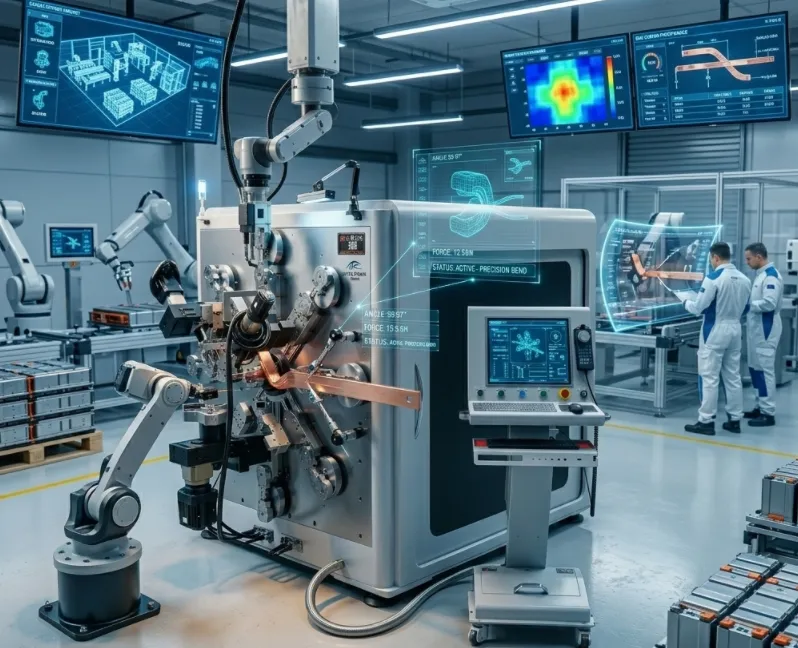
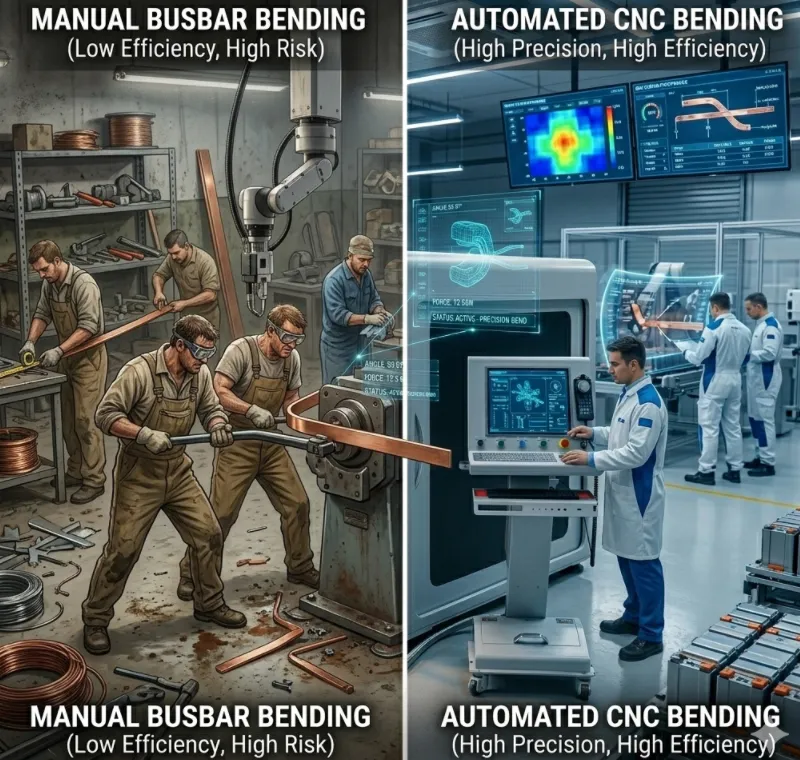
- Low efficiency: 8–15 pcs/hour with manual bending
- Poor accuracy: deviation ≥ ±0.5°
- Long changeover time: 1–2 hours
- High labor cost and safety risks
Five Key Selection Criteria
1. Precision
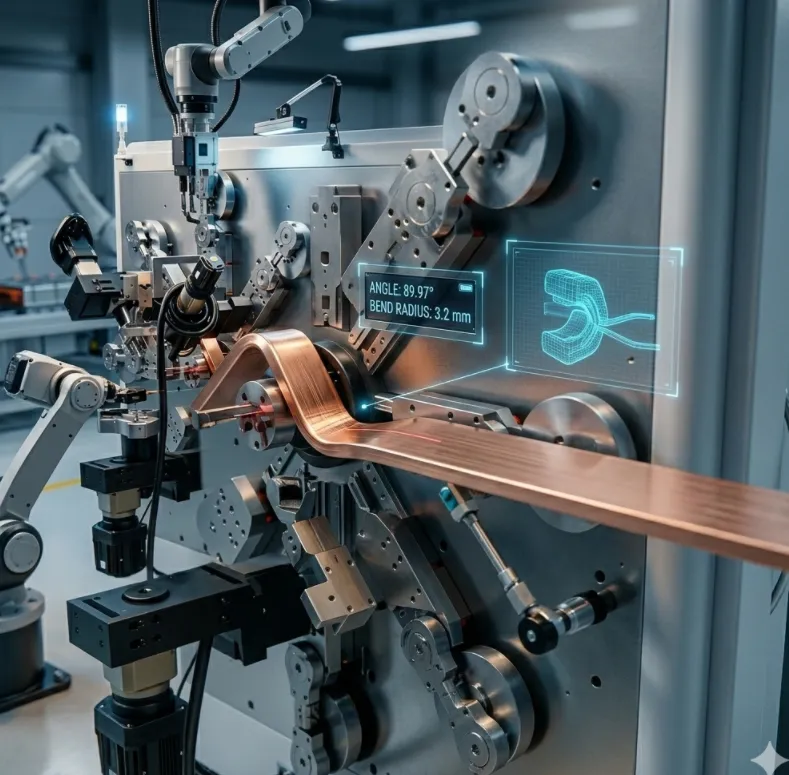
Minimum requirement: ±0.2° for stable electrical performance and low defect rate.
2. Multi-Axis Control
13-axis servo system ensures synchronized operations and high efficiency (up to 45 pcs/hour).
3. Adaptive Feeding
Supports 2.0–5.0 mm thickness and 8–30 mm width with automatic alignment and fast changeover.
4. Customization
Supports punching, chamfering, slotting, and cutting.
5. Service Support
7×24 remote support and 48-hour on-site service ensure production continuity.
Common Mistakes to Avoid
- Focusing only on price
- Ignoring control system performance
- Neglecting after-sales service
- Lack of customization capability
Expected Results
- Efficiency increase: 3–5×
- Output: up to 45 pcs/hour
- Changeover time: reduced to 15 minutes
- Lower labor cost and zero safety incidents
Final Checklist
- Accuracy ≥ ±0.2°
- 13-axis control system
- Adaptive feeding available
- Multi-process support
- Reliable service response
Conclusion
Choose a copper busbar machine based on precision, flexibility, and long-term value to meet the demands of EV manufacturing.
 +86-18098256570
  Email
Email

