
As global power distribution systems continue to evolve, busbars have become critical conductive components in modern electrical infrastructure. Recently, we had the opportunity to host an Italian client specializing in switchgear manufacturing. Their visit not only highlighted real production challenges but also opened up new directions for the development of advanced busbar bending machines.
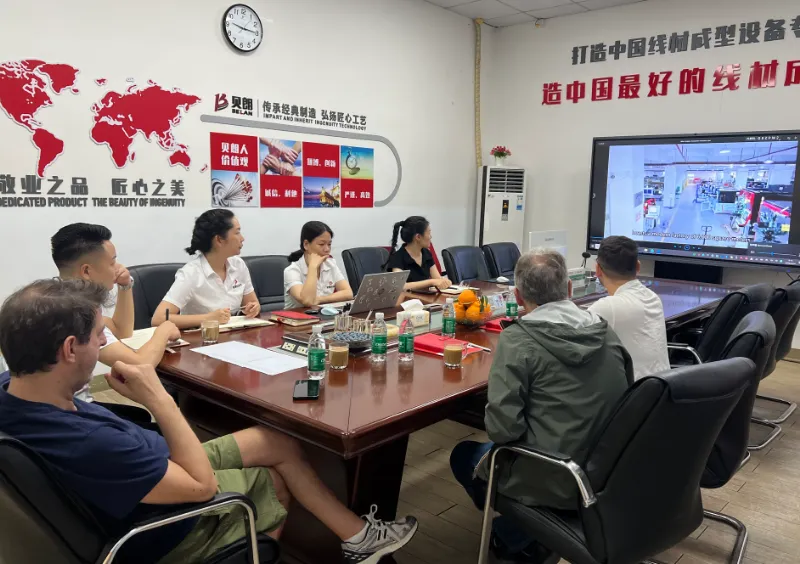
Client Background: Challenges in Busbar Processing
The Italian client focuses on mid-to-high-end electrical cabinets, where a large number of bare copper busbars are used. Their current production method relies heavily on conventional machines and manual operations.
Limitations of Traditional Busbar Bending Processes
Their existing process includes cutting, punching, and bending using basic machines. This approach presents several issues:
- Multiple separate processes increase handling time
- Heavy reliance on manual labor
- Low production efficiency and inconsistent quality
- Difficulty processing large busbars (20×5mm to 100×8mm)
For larger busbars, especially up to 100mm width and 8mm thickness, common problems include:
- Bending angle deviation greater than ±1°
- Surface marks affecting conductivity and appearance
- Frequent manual adjustments
- Unstable production cycle time

Machine Demonstration: Standard Busbar Bending Technology
During the visit, we demonstrated our existing busbar bending machine, which operates under a coil-fed automation process.
Coil Processing Workflow
- Automatic feeding from coil
- Straightening system (≤0.5mm/m accuracy)
- CNC bending (±0.2° precision)
- Automatic cutting
This system is ideal for:
- Small to medium-sized busbars
- High-volume production
- Standardized components
Performance Comparison
| Parameter | Traditional Method | Automatic Machine |
|---|---|---|
| Labor Requirement | 2–3 operators | 1 operator |
| Production Efficiency | 5–8 pcs/min | 12–18 pcs/min |
| Bending Accuracy | ±1° | ±0.2° |
| Consistency | Unstable | Highly consistent |
While the client appreciated the automation level, they pointed out that their products are large, pre-cut busbars, which are not suitable for coil processing.
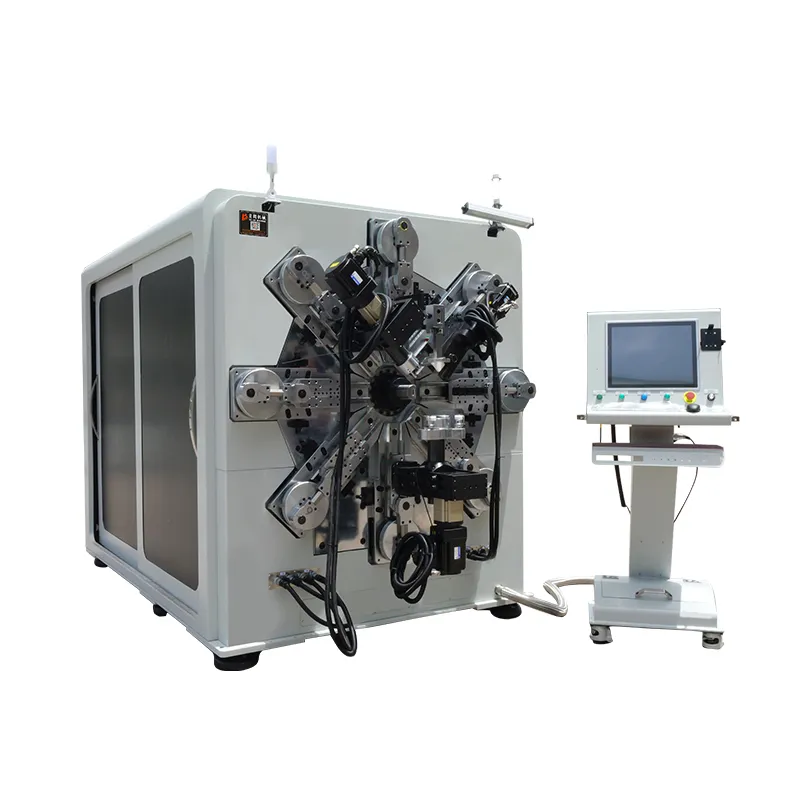
Technical Gap: Coil Processing vs Cut-Length Bending
Standard Coil Processing
- Continuous production
- High efficiency
- Suitable for smaller busbars
Limitations:
- Not suitable for heavy and thick busbars
- Limited flexibility for short parts
Client Requirement: Cut-Length Bending
The client’s products feature:
- Size range: 20×5mm to 100×8mm
- Pre-cut individual parts
- Multiple bending angles and complex shapes
This requires a completely different approach:
- Manual or robotic loading of cut parts
- Precision positioning and clamping
- Multi-axis CNC bending system
This difference means the machine structure, clamping system, and drive system must be redesigned.
Development Direction: Custom Busbar Bending Machine
Based on the discussion, we proposed a customized solution for large busbar bending applications.
Core Design Concepts
- Heavy-duty servo system for high torque and stability
- Multi-axis bending structure for complex shapes
- High-rigidity clamping system to prevent slipping
- Modular tooling for quick changeover
Target Performance
- Bending accuracy: within ±0.3°
- Surface indentation reduced by 30%
- Cycle time: ≤10 seconds per part
- Manual intervention reduced by 50%
Application Scenarios
Power Industry
- Switchgear systems
- Busbar assemblies
- Substation components
New Energy Vehicles
- Battery pack busbars
- Power distribution units (PDU)
- Inverter connections
With the rapid growth of the EV industry, demand for large and high-precision busbars is increasing significantly.
Client Feedback and Cooperation Intention
After in-depth discussions, the client showed strong confidence in our capabilities:
- R&D and engineering strength
- Experience in custom machine development
- Deep understanding of busbar processing
The client expressed willingness to:
- Provide detailed drawings
- Pay for machine design and development
- Establish long-term cooperation
A preliminary agreement has been reached.
FAQ
What thickness of busbar can your machine handle?
Standard machines support 3–10mm thickness. For larger sizes such as 100×8mm, a custom-designed solution is required.
What is the difference between coil and cut-length bending?
Coil bending is suitable for continuous production and smaller parts, while cut-length bending is ideal for large, complex, and customized busbars.
Will bending affect electrical conductivity?
With optimized tooling and pressure control, surface damage is minimized, ensuring excellent conductivity and durability.
Do you offer custom solutions?
Yes, we specialize in tailored solutions based on customer drawings and production requirements.
Conclusion
This visit from our Italian client represents more than just a factory tour—it highlights a growing demand for advanced busbar bending technology. As a manufacturer, we are committed to developing innovative solutions for large and complex busbar applications.
If you have similar busbar bending requirements, feel free to send us your drawings for a customized solution.
 +86-18098256570
  Email
Email

